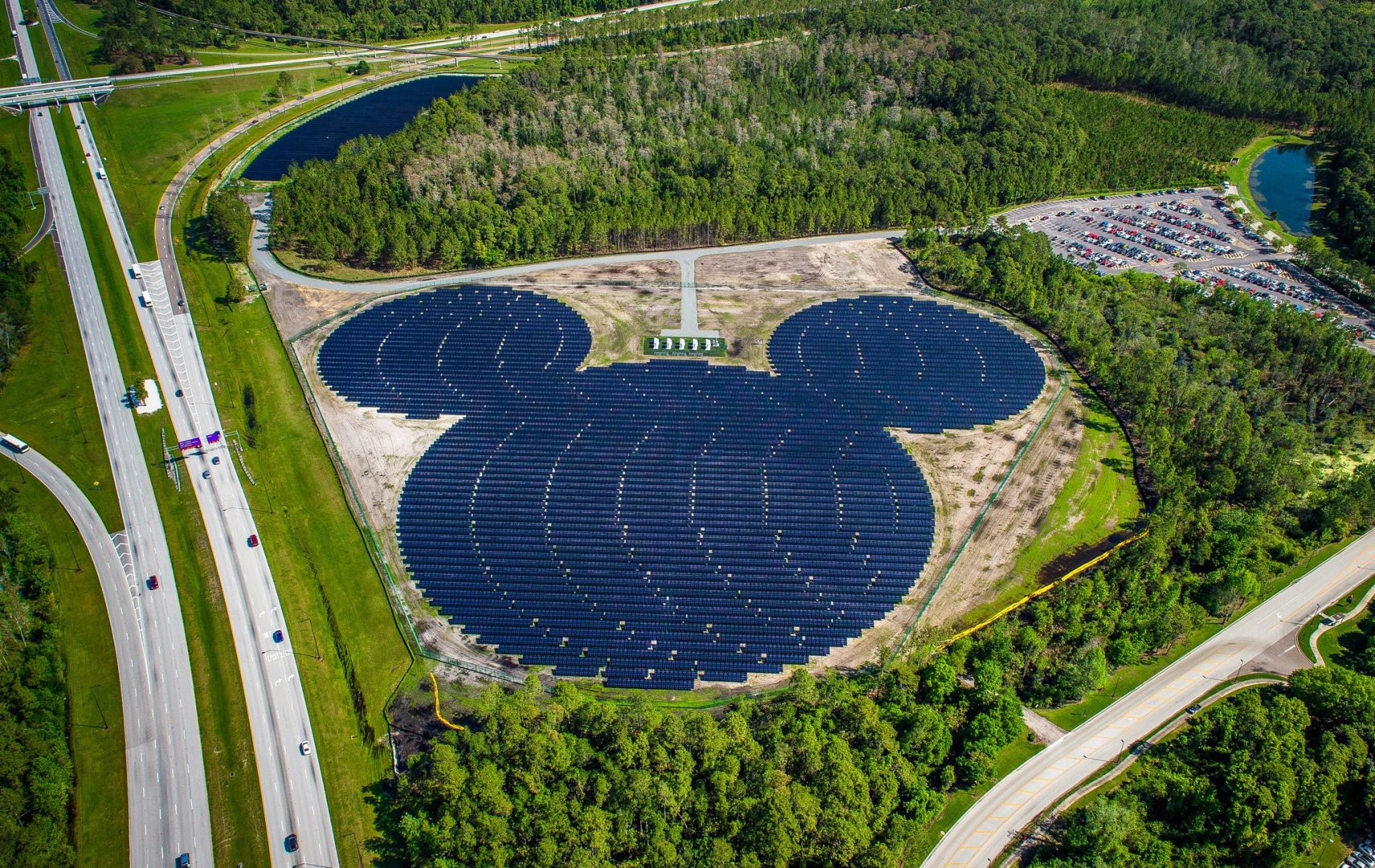
When guests visit a Disney resort or set sail with Disney Cruise Line, the magic they experience may be powered, in part, by something surprising: sunshine.
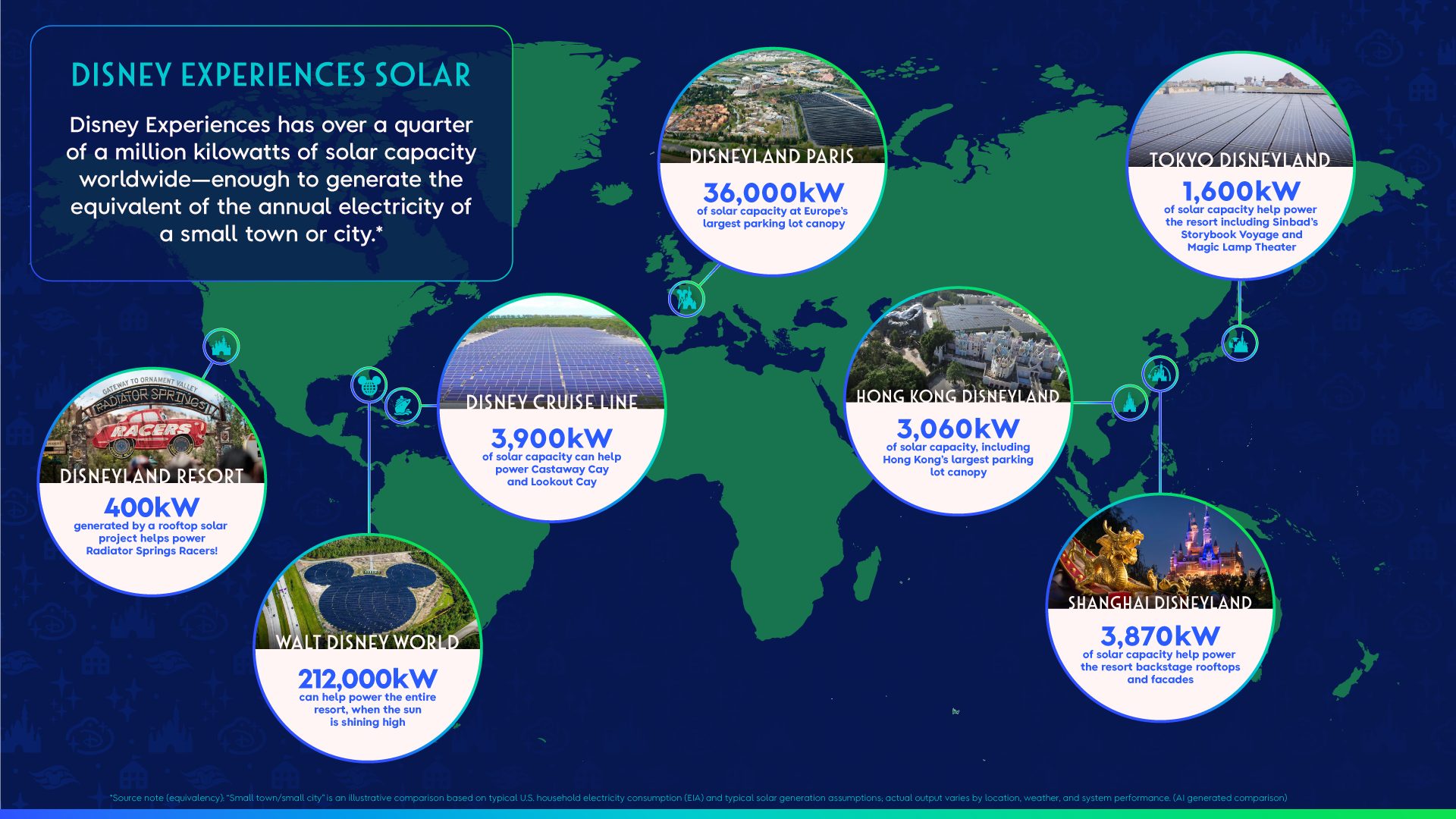
Across Disney Experiences, solar projects around the world now generate more than a quarter of a million kilowatts of solar capacity — enough electricity to power a small town or city for an entire year.*
Below is a snapshot that shows just how the sun brings Disney magic around the globe.
Walt Disney World Uses Solar Energy Across the Resort
At Walt Disney World Resort in Florida, solar energy plays an especially significant role.
In total across four sites, the resort now has 212,000 kilowatts of solar capacity, with over 600,000 solar panels — generating roughly enough energy to power over 19,000 Florida homes for one year.**
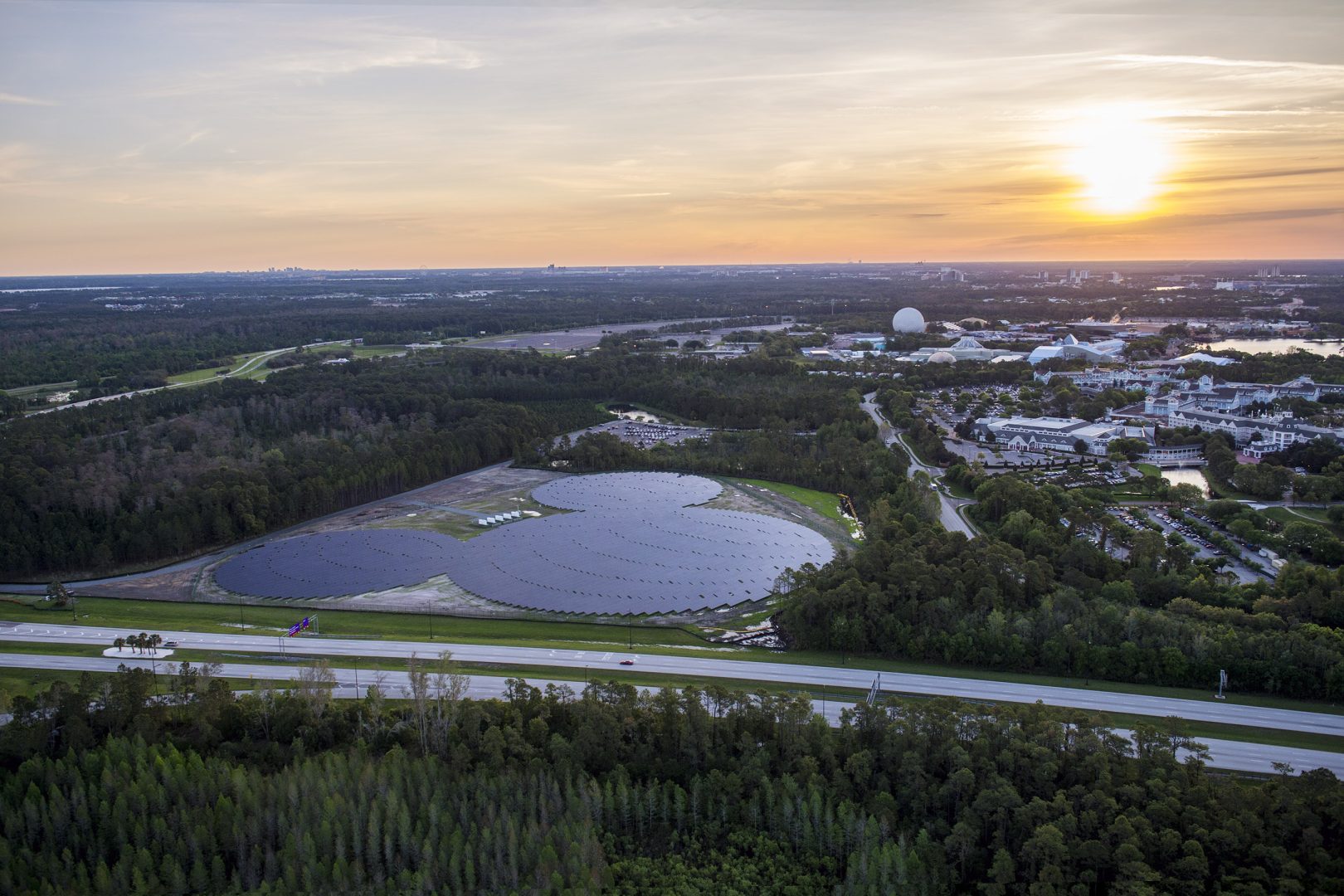
On a bright spring or summer day, together these projects can now produce up to 100% of the resort’s daytime power needs, helping support one of the largest vacation destinations in the world.
These include:
- The newest solar facility is a 74,500-kilowatt, 484-acre site in Levy County, Fla. Built and operated by Bronson Solar in collaboration with Central Florida Tourism Oversight District, this site helps diversify energy sources across multiple locations, so the magic doesn’t rely on sunshine from just one place.
- This new project joins the fan-favorite solar “Hidden Mickey” at Walt Disney World (a 5,000-kilowatt site shaped like Mickey Mouse near EPCOT), along with two other large solar projects in the state.
Disneyland Resort Brings Solar Power to Radiator Springs Racers

At Disney California Adventure Park, Radiator Springs Racers can be supported by 1,400+ solar panels that provide a capacity of 400-kilowatts — that is roughly equal to powering nearly 100 Anaheim households** annually. This is one of many exciting efforts underway at Disneyland Resort.
Disneyland Paris Is Home to Europe’s Largest Solar Canopy
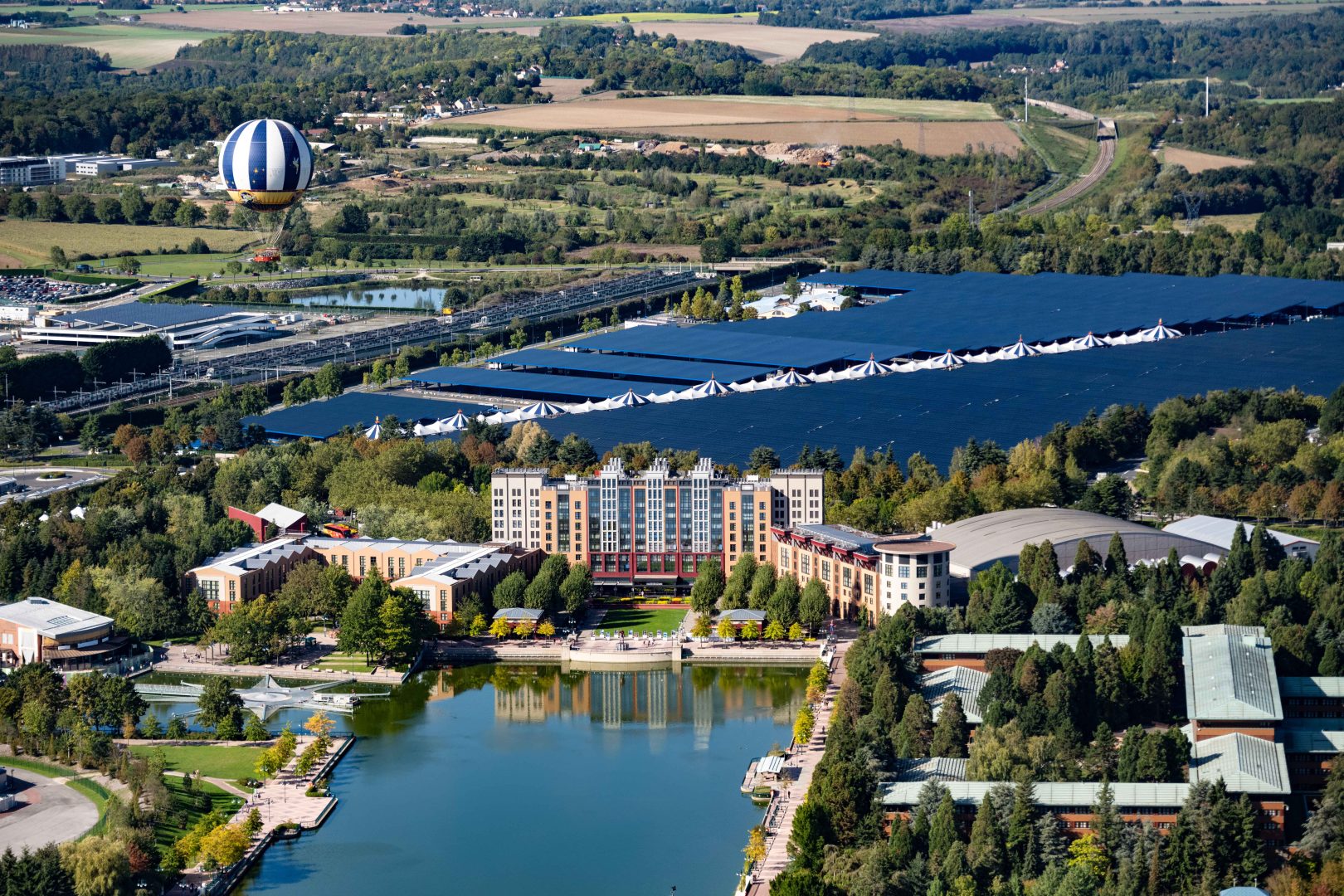
Disneyland Paris is home to Europe’s largest solar parking lot canopy, with approximately 36,000 kilowatts of solar capacity and over 80,000 panels.
This offers guests shade and shelter and generates enough electricity to power the equivalent of a town of about 17,400 people.
Hong Kong Disneyland Features the City’s Largest Rooftop Solar Project
Solar energy at Hong Kong Disneyland Resort has a total capacity of 3,060 kilowatts and comes primarily from rooftops throughout the park.
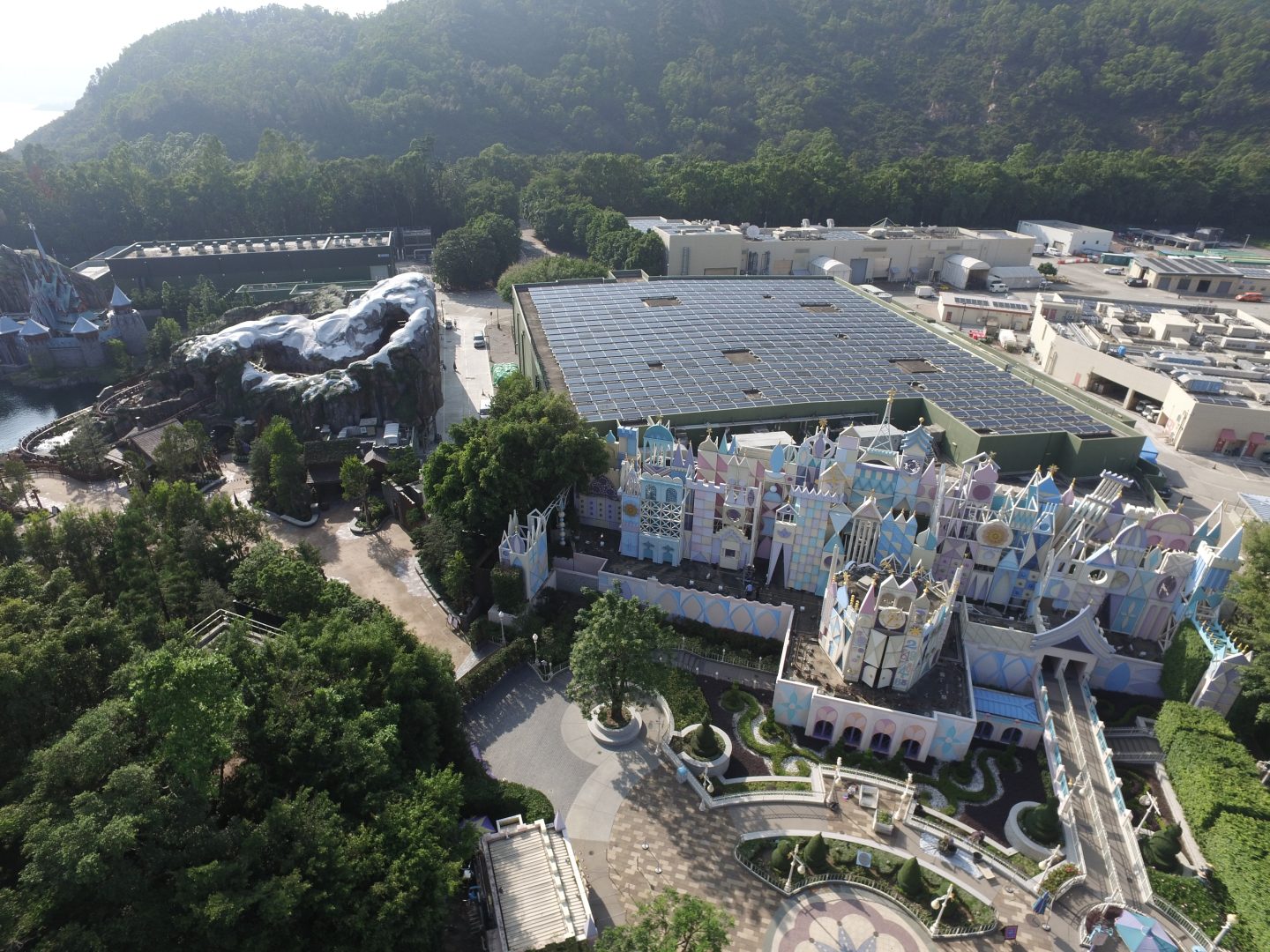
- The resort has a solar capacity of 2,860 kilowatts with over 7,500 panels on rooftops across the park — the largest rooftop solar project in all of Hong Kong.
- In 2023, Hong Kong Disneyland Resort also installed 200 kilowatts of solar capacity in a parking lot canopy, featuring more than 400 panels.
Shanghai Disney Resort Adds Thousands of Solar Panels
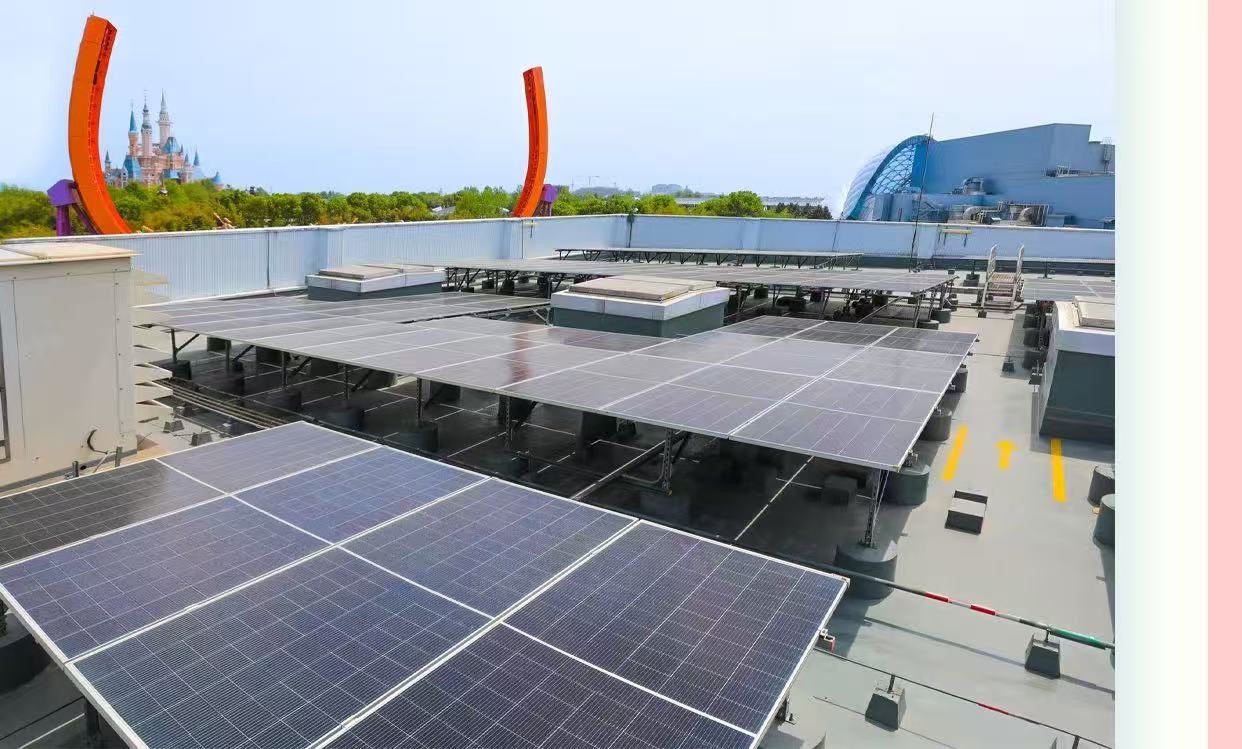
Shanghai Disney Resort has a solar capacity of 3,870 kilowatts featuring around 2,000 solar panels including rooftops and facades.
Inside Tokyo Disney Resort’s Use of Solar Energy
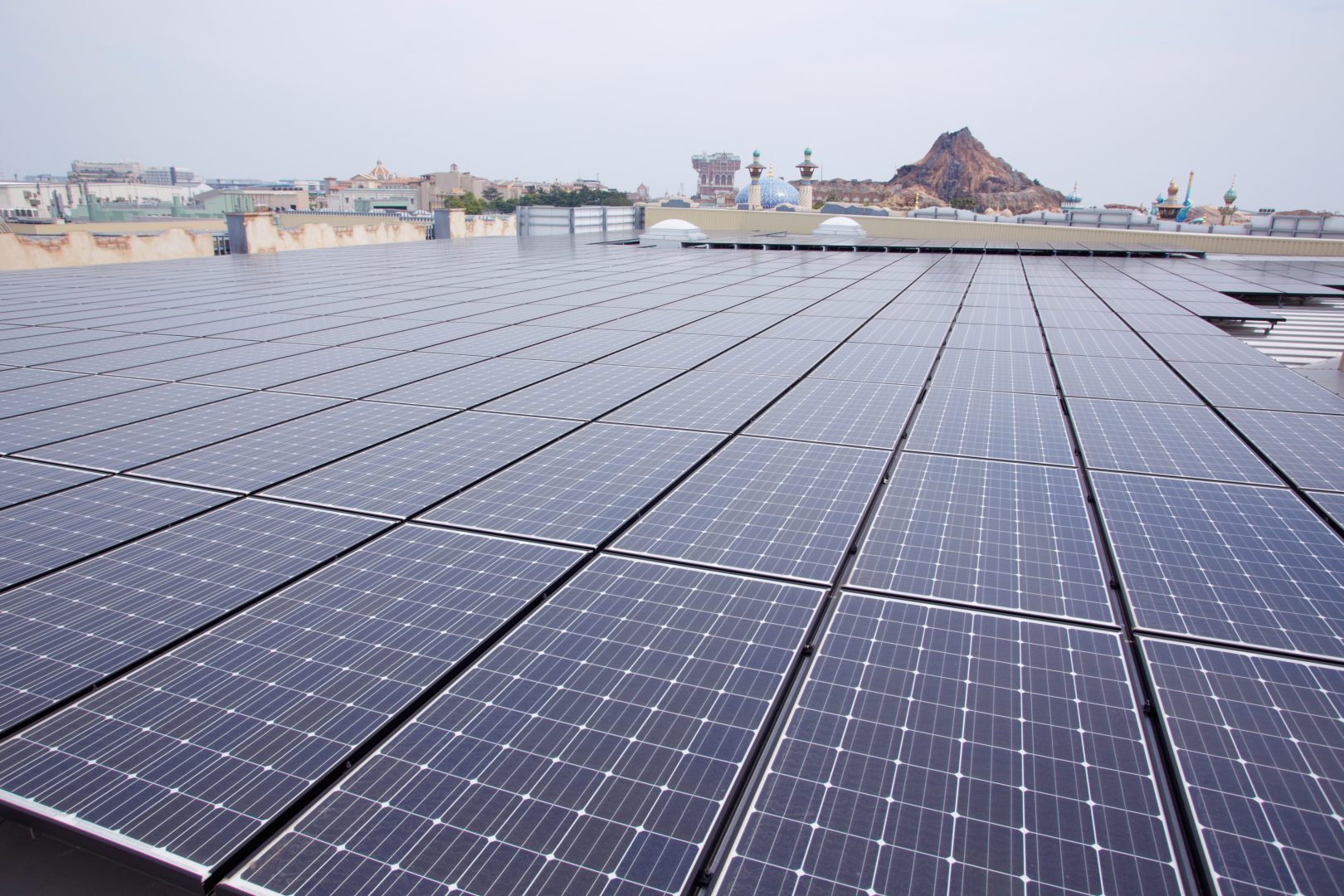
Tokyo Disney Resort has a solar capacity of 1,600+ kilowatts with panels installed across 10 rooftop locations.
Disney Cruise Line Brings Solar Power to Island Destinations
Solar energy also plays a key role at Disney Cruise Line island destinations in the Bahamas, with nearly 12,000 solar panels with capacity of 3,900 kilowatts across two projects.
- Disney Castaway Cay features approximately 1,400 kilowatts of solar capacity.
- Disney Lookout Cay at Lighthouse Point includes around 2,500 kilowatts of solar capacity.
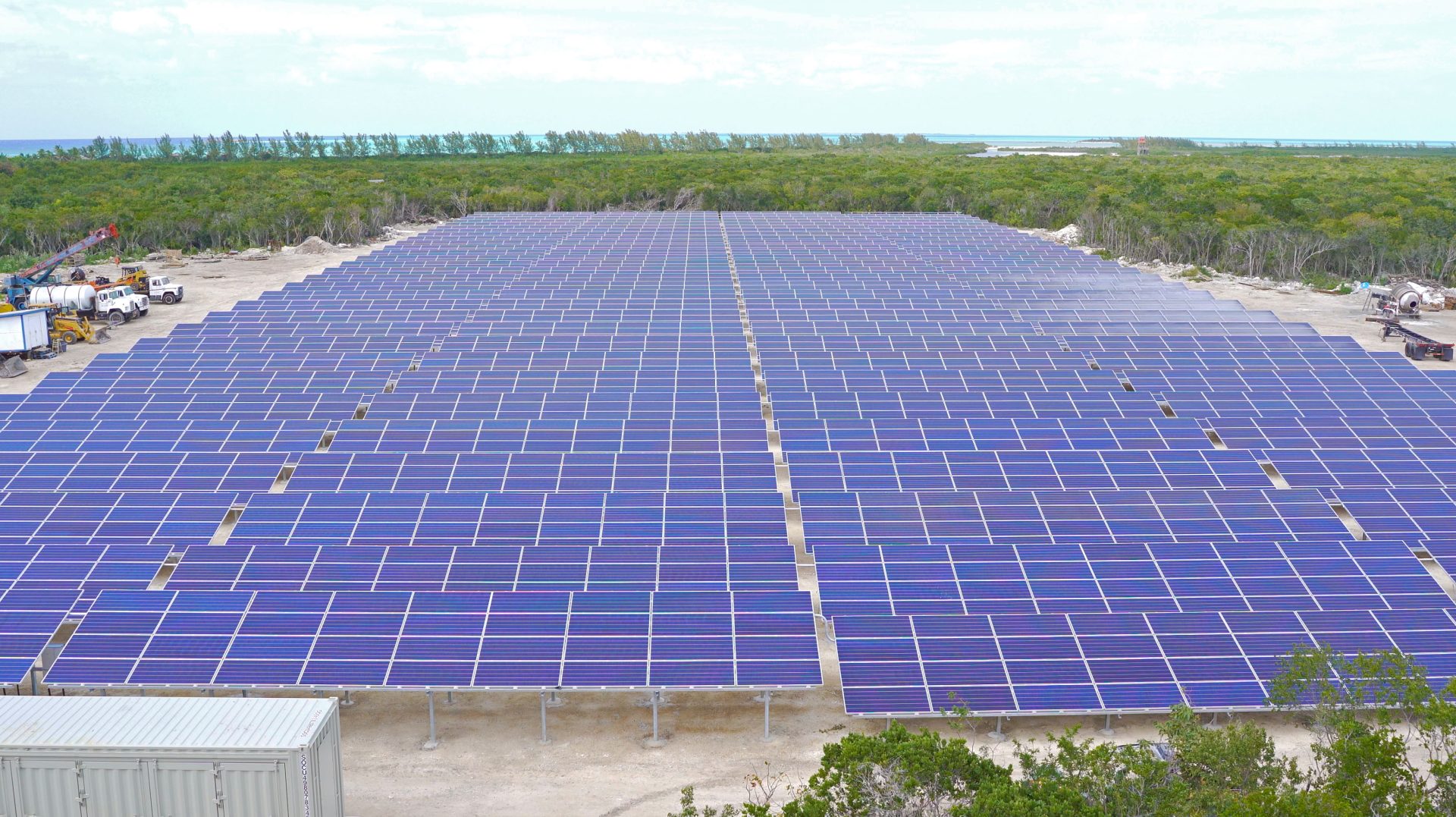
Together, these systems provide a significant portion of the electricity needed for these island locations.
Powering the Magic Today — and Tomorrow
From theme parks and resorts to cruise destinations around the world, solar energy is an important part of how Disney Experiences operates while continuing to deliver unforgettable moments.
Most guests may never see these solar projects during a Disney visit, but every day, they’re quietly helping the magic shine a little brighter. Learn how our solar helps pollinator environments here.
*Source note (equivalency): “Small town/small city” is an illustrative comparison based on typical U.S. household electricity consumption (EIA) and typical solar generation assumptions; actual output varies by location, weather, and system performance. (AI generated comparison)